
If your dog is constantly scratching, licking their paws, rubbing against furniture, or developing recurring ear infections, allergies may be the hidden culprit. Allergies are among the most common health problems affecting dogs of all breeds, ages, and sizes. Unfortunately, many owners mistake allergy symptoms for normal itching or temporary skin irritation, allowing the problem to worsen over time.
Unlike humans, dogs usually show allergies through their skin rather than sneezing or watery eyes. Persistent itching, red skin, hot spots, ear infections, and excessive licking are often the first warning signs that something is triggering an allergic reaction.
The good news is that most allergies can be successfully managed once the underlying cause is identified. With the right combination of veterinary care, nutrition, grooming, and environmental management, many dogs live happy, comfortable lives despite chronic allergies.
In this comprehensive Dog Allergy Guide, you’ll learn how to recognize allergy symptoms, understand the different types of allergies, discover treatment options, avoid common mistakes, and learn practical strategies that help reduce flare-ups throughout the year.
Quick Answer
Dog allergies are immune system reactions to substances such as pollen, dust mites, fleas, certain foods, or environmental allergens. The most common signs include itching, licking paws, ear infections, red skin, and hair loss. Successful treatment usually combines identifying the trigger, veterinary guidance, medication when needed, proper grooming, and long-term allergy management.
Dog Allergy at a Glance
If you’re short on time, the infographic below summarizes the most common types of dog allergies, key symptoms, common triggers, treatment options, and prevention tips. Continue reading for a detailed step-by-step guide on diagnosing and managing allergies in dogs.
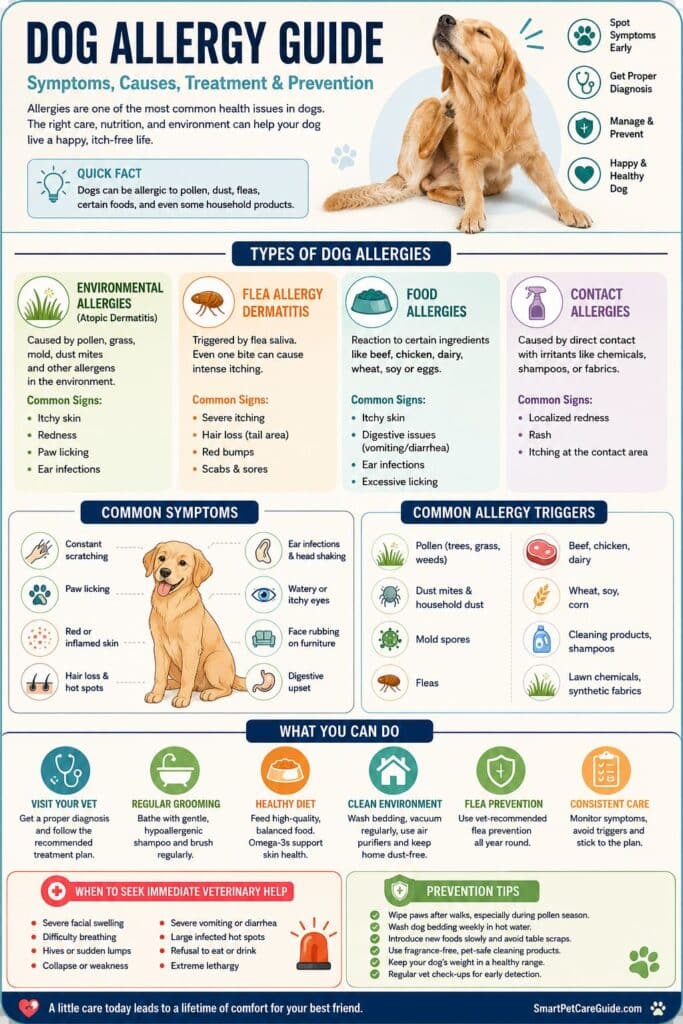
Figure: Visual overview of the most common dog allergies, including environmental, food, flea, and contact allergies, along with symptoms, prevention strategies, and when to seek veterinary care.
Why This Matters
Allergies rarely disappear on their own.
Without treatment, repeated scratching and licking can lead to:
- Skin infections
- Chronic ear infections
- Painful hot spots
- Hair loss
- Thickened skin
- Poor sleep
- Reduced quality of life
Early diagnosis also helps prevent unnecessary treatments for conditions that may actually be caused by allergies.
Whether you own a Labrador Retriever, German Shepherd, Golden Retriever, French Bulldog, Poodle, Beagle, Boxer, Bulldog, Shih Tzu, or mixed-breed dog, understanding allergies can save your pet from months—or even years—of discomfort.
Understanding Dog Allergies
An allergy occurs when a dog’s immune system overreacts to something that would normally be harmless.
Instead of ignoring pollen or certain foods, the immune system mistakenly treats them as dangerous invaders and releases inflammatory chemicals that cause itching, redness, and irritation.
Some dogs inherit allergies genetically, while others develop them gradually as they age.
Common Types of Dog Allergies
1. Environmental Allergies (Atopic Dermatitis)
This is the most common allergy in dogs.
Common triggers include:
- Tree pollen
- Grass pollen
- Weed pollen
- Mold spores
- Dust mites
- Household dust
Symptoms often become worse during spring and fall but can occur year-round indoors.
2. Flea Allergy Dermatitis
Some dogs are extremely sensitive to flea saliva.
Even a single flea bite can cause:
- Intense itching
- Hair loss
- Scabs
- Tail-base irritation
- Red skin
Dogs with flea allergies require strict flea prevention all year.
3. Food Allergies
Food allergies are less common than environmental allergies but can still occur.
Common ingredients include:
- Beef
- Chicken
- Dairy
- Wheat
- Eggs
- Soy
Food allergies usually develop after eating the same food for months or years.
4. Contact Allergies
These occur when the skin directly touches an irritating substance such as:
- Certain shampoos
- Cleaning products
- Lawn chemicals
- Synthetic fabrics
- Plastic food bowls
Dog Allergy Comparison
Not all allergies affect dogs in the same way. Understanding the differences between allergy types can help you recognize symptoms earlier and seek the most appropriate treatment.
| Allergy Type | Common Triggers | Typical Symptoms | Diagnosis | Common Treatment |
|---|---|---|---|---|
| Environmental Allergies (Atopic Dermatitis) | Pollen, grass, dust mites, mold, weeds | Itchy skin, paw licking, ear infections, red skin, hot spots | Physical examination, allergy testing, medical history | Allergy medications, medicated shampoos, immunotherapy, environmental management |
| Food Allergies | Beef, chicken, dairy, wheat, soy, eggs | Chronic itching, ear infections, vomiting, diarrhea, excessive licking | Veterinary-supervised elimination diet | Prescription or novel-protein diet, avoiding trigger ingredients |
| Flea Allergy Dermatitis | Flea saliva | Severe itching around the tail, lower back, belly, hair loss | Flea inspection and response to flea prevention | Monthly flea prevention, medicated shampoos, anti-inflammatory medications |
| Contact Allergies | Cleaning products, lawn chemicals, certain fabrics, shampoos | Localized redness, rash, itching where skin touches the irritant | Identifying and removing the suspected trigger | Avoidance of the allergen, topical treatments, soothing shampoos |
Remember: Some dogs suffer from more than one type of allergy at the same time. For example, a dog with environmental allergies may also have food sensitivities or flea allergies, making proper diagnosis especially important.
Step-by-Step Guide to Managing Dog Allergies
Step 1 – Recognize the Symptoms Early
The earlier allergies are identified, the easier they are to manage.
Common symptoms include:
Skin Problems
- Constant scratching
- Red skin
- Rash
- Hot spots
- Hair loss
- Thickened skin
Ear Problems
- Frequent ear infections
- Head shaking
- Bad odor
- Ear discharge
Paw Problems
- Excessive licking
- Chewing paws
- Red paws
- Brown saliva stains
Face Problems
- Rubbing face on carpet
- Itchy eyes
- Facial swelling (rare but serious)
Digestive Symptoms (Usually Food Allergies)
- Vomiting
- Diarrhea
- Excess gas
- Soft stools
Step 2 – Schedule a Veterinary Examination
Many conditions mimic allergies, including:
- Mange
- Ringworm
- Bacterial infections
- Yeast infections
- Hormonal disorders
Your veterinarian may recommend:
- Skin examination
- Ear cytology
- Flea check
- Allergy testing
- Food elimination trial
- Skin scraping
- Blood tests (if needed)
Proper diagnosis prevents unnecessary medications and identifies the best treatment plan.
Step 3 – Identify the Allergy Trigger
Finding the trigger is often the most challenging part.
Environmental Triggers
- Grass
- Trees
- Dust
- Mold
- Pollens
Food Triggers
An elimination diet is considered the gold standard.
Dogs typically eat a prescription or novel-protein diet for 8–12 weeks before foods are gradually reintroduced.
Flea Allergies
Consistent flea prevention usually confirms the diagnosis.
Step 4 – Treat Active Symptoms
Treatment depends on severity.
Your veterinarian may recommend:
Anti-Itch Medication
These reduce inflammation and itching.
Allergy Injections
Some dogs benefit from immunotherapy after allergy testing.
Antibiotics
Used when secondary bacterial infections develop.
Antifungal Medication
Necessary for yeast infections.
Medicated Shampoos
Special shampoos help remove allergens while soothing irritated skin.
Step 5 – Improve Daily Skin Care
Daily care greatly reduces flare-ups.
Helpful habits include:
- Wipe paws after walks
- Vacuum frequently
- Wash bedding weekly
- Bathe regularly using veterinary-approved shampoo
- Brush loose hair
- Control indoor humidity
- Keep flea prevention current
For bathing techniques, see our Dog Bathing Guide, and for coat maintenance tips, read our Dog Grooming Guide. These routines can help remove allergens trapped in your dog’s coat and skin.
Step 6 – Support Skin Health Through Nutrition
Healthy skin starts from the inside.
Important nutrients include:
- Omega-3 fatty acids
- Vitamin E
- Zinc
- High-quality protein
- Balanced nutrition
Never add supplements without consulting your veterinarian.
Choosing a high-quality, nutritionally balanced diet is one of the best ways to support healthy skin and a strong immune system. While no single food can cure allergies, the right nutrition may help reduce inflammation and promote a healthier coat over time. If you’re looking for expert recommendations, explore our Best Dog Foods guide to compare top-rated formulas for dogs of different ages, sizes, and dietary needs.
Which Dog Breeds Are More Prone to Allergies?
Although any dog can develop allergies, certain breeds have a higher genetic risk.
Commonly affected breeds include:
| Breed | Details |
|---|---|
| Golden Retriever | Golden Retrievers are one of the breeds most commonly affected by environmental allergies due to their genetic predisposition. |
| Labrador Retriever | Labrador Retrievers often experience food and environmental allergies, particularly during adulthood. |
| German Shepherd | German Shepherds can develop chronic skin allergies that frequently affect their ears and paws. |
| French Bulldog | French Bulldogs are prone to skin fold irritation and environmental allergies because of their sensitive skin. |
| English Bulldog | English Bulldogs commonly experience allergic skin disease due to wrinkles and skin folds. |
| Boxer | Boxers are susceptible to seasonal allergies and may develop recurring skin infections if untreated. |
| Shih Tzu | Shih Tzus often suffer from skin and ear allergies because of their long coats and sensitive skin. |
| Pug | Pugs are more likely to experience allergic dermatitis affecting facial folds and paws. |
Mixed-breed dogs can also develop allergies, so every owner should know the warning signs.
If you own one of these breeds, check out our detailed Breed Guides for breed-specific grooming and health recommendations.
Seasonal Allergies vs. Year-Round Allergies
Seasonal
Usually caused by:
- Grass pollen
- Tree pollen
- Weeds
Symptoms worsen during specific seasons.
Year-Round
Usually caused by:
- Dust mites
- Mold
- Food allergies
- Indoor allergens
These dogs often itch throughout the year.
Home Management Tips
You cannot eliminate every allergen, but you can reduce exposure.
Helpful strategies include:
- Wash bedding weekly in hot water.
- Use high-quality air filters.
- Vacuum carpets regularly.
- Clean paws after outdoor walks.
- Bathe after heavy pollen exposure.
- Avoid heavily sprayed lawns.
- Maintain flea prevention year-round.
- Keep your home dry to reduce mold growth.
Common Mistakes
Mistake 1 – Assuming It’s Just Dry Skin
Persistent itching usually indicates an underlying problem.
Mistake 2 – Changing Foods Too Frequently
Randomly switching foods rarely identifies food allergies.
An elimination diet must be performed correctly under veterinary supervision.
Mistake 3 – Skipping Flea Prevention
Indoor dogs still get fleas.
One flea bite may trigger weeks of itching.
Mistake 4 – Using Human Allergy Medication Without Veterinary Advice
Some medications are unsafe or ineffective for dogs.
Always consult your veterinarian first.
Mistake 5 – Over-Bathing
Bathing too often can strip protective skin oils and worsen irritation.
Follow your veterinarian’s recommendations for bathing frequency and use a shampoo formulated for dogs.
Expert Tips
- Start flea prevention before allergy season begins.
- Keep a diary of flare-ups to identify possible triggers.
- Wash paws after every walk during pollen season.
- Use fragrance-free laundry detergent for dog bedding.
- Schedule routine ear checks for dogs with recurring infections.
- Brush your dog regularly to remove pollen, dust, and loose fur. Our Best Dog Brushes guide can help you choose the right brush for your dog’s coat type.
- Dogs with allergies often lick and chew their paws excessively. Keeping their nails trimmed helps reduce accidental skin damage. See our Best Dog Nail Clippers guide for safe trimming tools.
- Maintain a healthy weight because obesity can increase skin folds and worsen certain skin problems.
- Follow treatment consistently, even when symptoms improve.
Recommended Products
The right products can make allergy management easier.
1. Complete Dog Grooming Kits
If you groom your dog at home, investing in a complete grooming kit can make allergy management much easier. Many kits include brushes, combs, clippers, scissors, and other essential tools that help remove loose hair, dirt, pollen, and dander while keeping your dog’s coat clean and healthy. Explore our Best Dog Grooming Kits guide to compare the top-rated options for every coat type and budget.
2. Hypoallergenic Dog Shampoo
Look for:
- Oatmeal
- Aloe vera
- Soap-free formulas
- Moisturizing ingredients
Avoid strong fragrances.
Follow our Best Dog Shampoo guide to choose the right shampoo for your dog.
3. Dog Brushes
Regular brushing removes allergens trapped in the coat.
Choose a brush suitable for your dog’s coat type.
4. Dog Hair Dryers
Proper drying is an important part of skin care, particularly for dogs with dense coats or those prone to allergies. Leaving the coat damp can encourage bacterial or yeast growth, which may worsen itching and skin irritation. A pet-specific dryer provides controlled airflow and temperature, making it safer and more comfortable than a regular human hair dryer. Compare the top models in our Best Dog Hair Dryers guide to find the best option for your dog’s coat type and grooming routine.
5. Flea Prevention Products
Monthly flea prevention is essential, even for indoor dogs.
Consult your veterinarian for the most appropriate option.
6. Air Purifier
HEPA air purifiers can reduce airborne allergens inside your home.
7. Omega-3 Supplements
Veterinarian-approved omega-3 supplements may support skin health and reduce inflammation as part of an overall treatment plan.
Can Humans Catch Dog Allergies?
A common misconception is that allergies can spread from one dog to another or even from dogs to people.
The good news is that dog allergies are not contagious.
If your dog has environmental allergies, food allergies, or flea allergy dermatitis, neither your family nor your other pets can “catch” those allergies simply by being around them.
However, some conditions that resemble allergies—such as mites, fungal infections (ringworm), or certain parasites—can be contagious. This is one reason why an accurate veterinary diagnosis is so important before beginning treatment.
People can also be allergic to dogs, but this is a completely different condition. Human allergies are usually caused by proteins found in a dog’s skin cells (dander), saliva, or urine—not because the dog itself has allergies.
If several pets in your household develop itching around the same time, consult your veterinarian promptly to rule out contagious skin diseases or flea infestations rather than assuming allergies are the cause.
Emergency Warning Signs: When to See a Veterinarian Immediately
Most dog allergies develop gradually, but some allergic reactions require immediate medical attention. Never ignore sudden or severe symptoms.
Seek emergency veterinary care if your dog experiences any of the following:
- Difficulty breathing or rapid breathing
- Swollen face, lips, eyelids, or muzzle
- Severe hives covering large areas of the body
- Collapse or inability to stand
- Continuous vomiting or severe diarrhea
- Pale gums
- Sudden weakness or extreme lethargy
- Uncontrolled bleeding from irritated skin
- Large infected hot spots with pus or foul odor
- Refusal to eat or drink for more than 24 hours
- Signs of severe pain or distress
These symptoms could indicate a serious allergic reaction (anaphylaxis), a severe skin infection, or another life-threatening medical condition requiring urgent treatment.
Important: Never give your dog human allergy medications unless specifically instructed by your veterinarian. Some medications can be dangerous or require precise dosing based on your dog’s weight and medical history.
Frequently Asked Questions
1. Can dog allergies be cured?
Most allergies cannot be permanently cured, but they can usually be managed successfully with long-term treatment and lifestyle changes.
2. What is the most common allergy in dogs?
Environmental allergies (atopic dermatitis) are the most common.
3. How do I know if my dog has food allergies?
Food allergies often cause chronic itching, recurring ear infections, and digestive issues. A veterinary-supervised elimination diet is the most reliable way to diagnose them.
4. Can puppies develop allergies?
Yes. Some puppies show signs early, while others develop allergies between one and three years of age.
5. How often should I bathe an allergic dog?
It depends on your veterinarian’s advice and the type of allergy. Many dogs benefit from medicated baths every one to two weeks, while others require a different schedule.
6. Are grain-free diets better for allergies?
Not necessarily. Most food allergies involve proteins rather than grains. Never switch to a grain-free diet without veterinary guidance.
7. Can stress make allergies worse?
Stress does not cause allergies, but it can increase licking and scratching, making skin problems appear more severe.
8. Are allergies contagious?
No. Allergies cannot spread from one dog to another or from dogs to people.
9. Can indoor dogs develop allergies?
Yes. Dust mites, mold, household dust, and food ingredients are common indoor triggers.
10. Can grooming help reduce allergies?
Absolutely. Regular brushing, proper bathing, and coat maintenance remove allergens from the skin and coat while helping you spot early signs of irritation.
Final Thoughts
Dog allergies can be frustrating for both pets and their owners, but they don’t have to control your dog’s life. Whether the trigger is pollen, fleas, food, or another environmental factor, early recognition and a consistent management plan can dramatically improve your dog’s comfort and overall well-being.
Successful allergy care combines regular veterinary checkups, proper nutrition, good grooming habits, effective flea control, and a clean living environment. While many dogs require lifelong management, most respond well to personalized treatment plans and enjoy active, happy lives.
By following the advice in this Dog Allergy Guide, staying alert to changes in your dog’s skin and behavior, and working closely with your veterinarian, you’ll be well equipped to reduce flare-ups and support your companion’s long-term health.
Medical Disclaimer: This article is for educational purposes only and should not replace professional veterinary advice. If your dog develops severe itching, swelling, difficulty breathing, or other concerning symptoms, contact your veterinarian immediately.