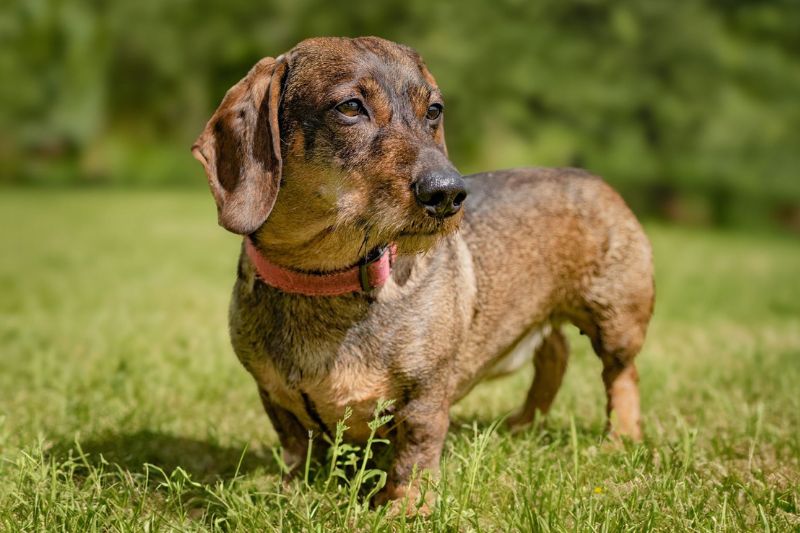
The Dachshund Dog is one of the most recognizable small dog breeds in the United States. Known for its long body, short legs, and confident personality, this breed combines charm with determination. Originally developed for hunting, Dachshunds today are popular family companions that adapt well to apartments and suburban homes.
Whether you are considering bringing home a Dachshund puppy or simply researching the breed, this complete guide covers everything you need to know—from temperament and training to health concerns, feeding, and ownership costs in the US.
Quick Breed Overview
| Category | Details |
|---|---|
| Origin | Germany |
| Breed Group | Hound |
| Size | Small |
| Weight | Standard: 16–32 lbs / Miniature: Under 11 lbs |
| Height | 5–9 inches |
| Lifespan | 12–16 years |
| Temperament | Loyal, Brave, Curious |
| Coat Type | Smooth, Long-haired, Wire-haired |
| Grooming Needs | Low to Moderate |
| Exercise Needs | Moderate |
| Family Friendly | Yes |
| Apartment Friendly | Excellent |
| Trainability | Moderate |
| Shedding | Low to Moderate |
Key Characteristics of the Dachshund Dog
Energy Level – Moderate
Dachshunds enjoy daily walks and play sessions. While they are not high-endurance dogs, they stay active and mentally engaged.
Trainability – Moderate
This breed is intelligent but independent. Positive reinforcement works better than strict correction.
Friendliness – High with Family
Dachshunds usually form strong attachments with their owners and can become extremely loyal companions.
Shedding – Manageable
Smooth-coated Dachshunds require minimal maintenance, while long-haired varieties need more regular brushing.
Breed History
The Dachshund originated in Germany more than 300 years ago. The breed’s name translates to “badger dog,” reflecting its original purpose. Hunters developed Dachshunds to enter underground burrows and flush out badgers and other small prey.
Their elongated body and strong chest allowed them to move efficiently through tunnels while remaining agile enough to hunt independently.
Over time, breeders developed multiple coat varieties and sizes to suit different hunting conditions.
By the early 1900s, the Dachshund gained popularity in the United States and eventually became one of America’s favorite companion breeds.
Today, the breed is admired more for companionship than hunting ability, although many still retain strong scent instincts and determination.
Temperament & Personality
Dachshunds are often described as small dogs with big personalities.
They are:
- Confident
- Loyal
- Alert
- Playful
- Protective
Many owners are surprised by how fearless these small dogs can be.
With Families
Dachshunds thrive in households where they receive regular attention. They often bond strongly with one person but still enjoy interacting with the entire family.
With Children
Older children generally do well with Dachshunds. However, young children should learn proper handling because the breed’s long back is sensitive.
With Other Pets
Early socialization improves compatibility with other dogs and cats.
Compared with the energetic nature of a Beagle, Dachshunds are usually more attached to their household. They are also more independent than a French Bulldog.
Why People Love the Dachshund Dog
Several characteristics make this breed consistently popular in the US:
- Compact size
- Adaptable to apartment living
- Distinctive appearance
- Long lifespan
- Strong emotional connection with owners
Owners who enjoy affectionate but confident dogs often find Dachshunds extremely rewarding.
Training & Socialization
Training a Dachshund Dog requires consistency, patience, and positive reinforcement. Although these dogs are intelligent, they were originally bred to work independently, which means they sometimes prefer making their own decisions.
Are Dachshunds Easy to Train?
Moderately.
They learn commands quickly but may ignore instructions if training becomes repetitive or harsh.
Best Training Methods
- Use short training sessions (10–15 minutes)
- Reward with treats and praise
- Focus on consistency
- Start training at 8–10 weeks
- Avoid punishment-based methods
Potty Training Tips
House training can take longer with Dachshunds compared with some breeds.
Success strategies:
- Create a fixed schedule
- Take puppies outside after meals
- Use crate training
- Reward immediately after successful potty breaks
Socialization
Expose your Dachshund early to:
- New people
- Other dogs
- Car rides
- Different surfaces
- Household sounds
Proper socialization helps reduce excessive barking and nervous behavior.
Owners considering larger protective breeds may notice that Dachshunds require less structure than a Rottweiler but more persistence than many companion breeds.
Is This Breed Right for You?
Before bringing home a Dachshund, consider your lifestyle carefully.
The Dachshund Dog May Be Right If You:
✔ Want a loyal companion
✔ Live in an apartment or smaller home
✔ Prefer moderate exercise
✔ Enjoy daily interaction with your dog
✔ Can commit to consistent training
The Dachshund Dog May Not Be Right If You:
✘ Want an off-leash adventure dog
✘ Have very limited time at home
✘ Prefer extremely obedient breeds
✘ Need a dog that tolerates rough handling
Care & Maintenance
Proper care keeps a Dachshund healthy and helps prevent common long-term issues.
Grooming
Smooth Coat
- Brush once weekly
- Occasional baths
Long-Haired
- Brush 3–4 times weekly
- Trim feathered areas
Wire-Haired
- Weekly brushing
- Professional grooming every few months
Exercise Needs
Daily activity helps maintain healthy weight.
Recommended routine:
- 30–60 minutes total activity
- Short walks
- Indoor play
- Puzzle toys
Avoid excessive jumping from furniture because repeated impact may increase back strain.
Living Conditions
Dachshunds adapt well to:
- Apartments
- Condos
- Family homes
However, stairs should be managed carefully, especially as the dog ages.
Compared with the playful but lower-energy French Bulldog, Dachshunds usually require more mental stimulation.
Common Health Problems
Like all breeds, Dachshunds have specific health concerns owners should understand.
1. Intervertebral Disc Disease (IVDD)
This is the most well-known Dachshund health issue.
Symptoms may include:
- Difficulty walking
- Pain
- Reluctance to jump
- Weakness in rear legs
Prevention:
- Maintain healthy weight
- Use ramps
- Avoid frequent stair climbing
2. Obesity
Even a few extra pounds can increase pressure on the spine.
Prevention:
- Controlled portions
- Daily exercise
- Limit treats
3. Dental Disease
Small breeds often develop dental problems.
Prevention:
- Brush teeth regularly
- Schedule professional cleanings
4. Eye Conditions
Some Dachshunds may develop:
- Cataracts
- Progressive retinal issues
5. Joint Problems
Joint support becomes increasingly important in older dogs.
Always schedule routine veterinary visits and discuss preventive care plans.
Diet & Nutrition
Nutrition directly impacts energy levels, weight management, and long-term health.
Choose foods that meet AAFCO nutritional standards.
Feeding Schedule
Puppies (2–6 months)
3–4 meals daily
Adults
2 meals daily
Seniors
2 controlled meals with adjusted calories
Portion Guidelines
Typical adult:
- ½–1½ cups daily
- Adjust based on age and activity
Popular US Dog Food Options
Examples often selected by owners:
Speak with your veterinarian before changing diets.
Healthy Treat Ideas
- Carrots
- Blueberries
- Small training treats
Avoid overfeeding.
Price & Cost (US)
Owning a Dachshund involves more than the purchase price.
Initial Cost
Breeder
$800–$3,500+
Adoption
$100–$600
First-Year Expenses
| Expense | Estimated Cost |
|---|---|
| Food | $400–$800 |
| Supplies | $300–$700 |
| Vet Care | $300–$800 |
| Training | $200–$600 |
| Insurance | $250–$700 |
Estimated first year total:
$2,000–$6,000+
Ongoing Annual Cost
Average:
$1,200–$3,000
Pet Insurance
Insurance may help manage unexpected spinal treatment expenses.
Pros & Cons of the Dachshund Dog
Every breed has strengths and challenges. Understanding both helps set realistic expectations.
Pros
✓ Loyal and affectionate with family
✓ Excellent for apartment living
✓ Compact size and easy portability
✓ Long lifespan compared with many breeds
✓ Distinct personality and entertaining behavior
✓ Moderate exercise requirements
Cons
✗ Can be stubborn during training
✗ Prone to back problems (IVDD)
✗ May bark more than expected
✗ House training can take time
✗ Strong prey drive in some individuals
✗ Sensitive to weight gain
For many owners, the positives outweigh the challenges—especially when training and preventive care start early.
Common Mistakes New Owners Make
Avoiding these common mistakes can significantly improve your experience with a Dachshund Dog.
1. Allowing Excessive Jumping
Jumping off beds, couches, and stairs repeatedly may increase spinal stress.
Solution:
- Use ramps
- Lift properly
- Create safer access around the home
2. Overfeeding
Dachshunds often act hungry even after eating.
Solution:
- Measure meals
- Avoid excessive treats
- Monitor body condition monthly
3. Skipping Early Training
Waiting until adulthood can create stubborn habits.
Solution:
- Begin training immediately after bringing your puppy home
4. Underestimating Mental Stimulation
These dogs are smart and curious.
Solution:
- Puzzle toys
- Scent games
- Rotating play activities
5. Treating Them Like Fragile Dogs
Although small, Dachshunds benefit from structure, routines, and confidence-building.
Best For
The Dachshund Dog is especially suitable for:
Families
Good family dogs when children understand respectful handling.
Singles
Excellent companions for people wanting a loyal and interactive pet.
Apartment Residents
Their size makes urban living easier.
Seniors
Moderate exercise needs make them manageable for many older adults.
First-Time Owners
Possible with preparation and consistent training.
However, households seeking very relaxed companion dogs may also compare this breed with a Bulldog, while active scent-driven households may prefer a Beagle.
Frequently Asked Questions (FAQ)
Are Dachshund dogs good family pets?
Yes. Dachshunds are loyal and affectionate. They generally do best with respectful children and owners who provide consistent routines.
Do Dachshund dogs bark a lot?
They can be vocal. Early training and sufficient activity help reduce unnecessary barking.
Can Dachshunds live in apartments?
Absolutely. Their compact size and moderate exercise needs make them one of the better apartment-friendly breeds.
How much exercise does a Dachshund Dog need?
Most adults benefit from approximately 30–60 minutes of daily activity split into walks and play.
Are Dachshunds difficult to train?
Not difficult, but they can be independent. Short sessions and positive reinforcement work best.
What is the average lifespan of a Dachshund Dog?
Most live between 12 and 16 years, with some living even longer when properly cared for.
Final Thoughts
The Dachshund Dog remains one of the most beloved companion breeds in the United States for good reason. This breed combines personality, intelligence, loyalty, and adaptability into a compact package.
Although owners must pay attention to spinal health, training consistency, and weight management, the reward is a deeply connected and entertaining companion.
If you want a dog that offers affection, confidence, and plenty of personality without requiring extensive space, a Dachshund may be an excellent fit.
Resources
For additional breed information:
- American Kennel Club (AKC): https://www.akc.org/dog-breeds/dachshund/
- Dachshund Club of America: https://www.dachshundclubofamerica.org/
- American Veterinary Medical Association: https://www.avma.org/