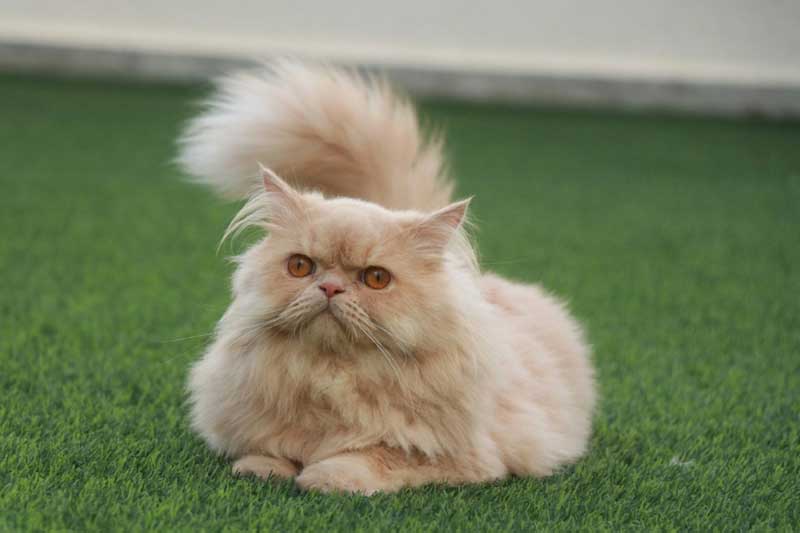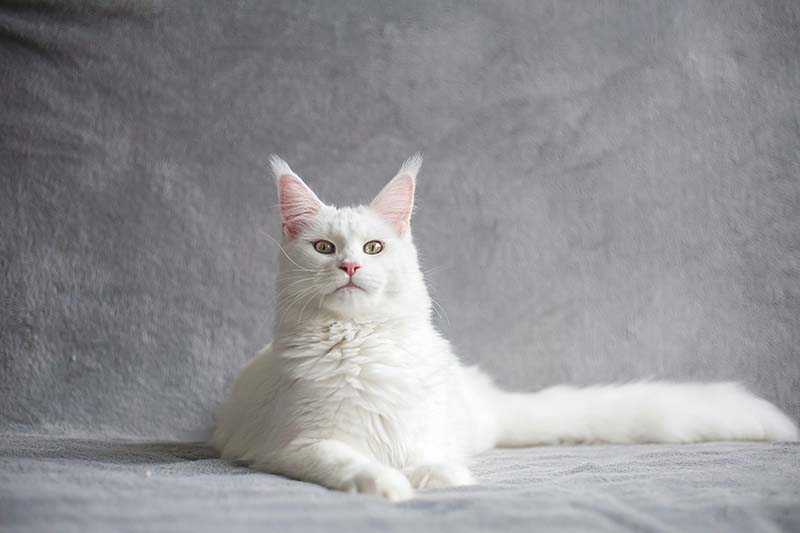
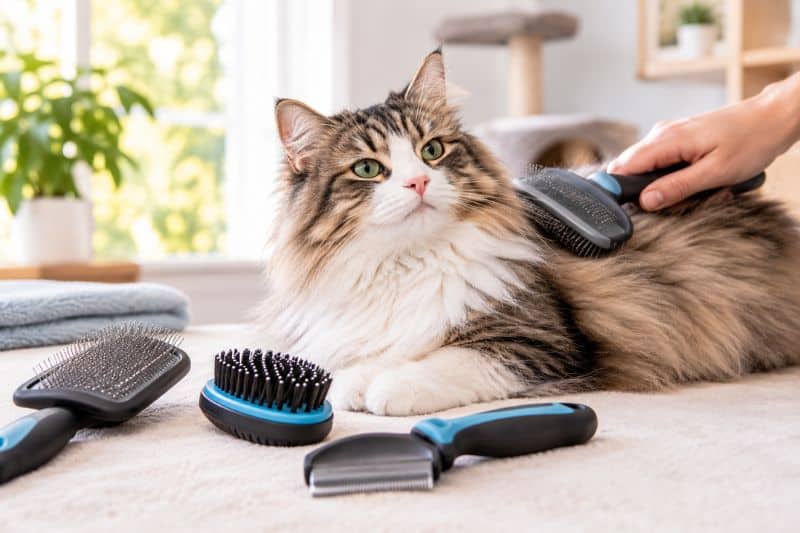
If you live with a cat, you already know that grooming can mean more than keeping your cat looking beautiful. Regular brushing can remove loose fur, reduce tangles, help keep the coat clean, and give you an opportunity to notice changes in your cat’s skin.
The challenge is finding the best cat brushes for your particular cat. A short-haired tabby does not necessarily need the same brush as a Maine Coon or Persian. Some cats enjoy a gentle bristle brush, while others respond better to a slicker brush or grooming glove.
We researched popular cat grooming brushes, compared different brush types, and looked at published testing from established pet-product reviewers. Business Insider tested 31 grooming tools with four cats, while The Spruce Pets tested 23 grooming tools in real homes. Their testing considered factors such as effectiveness, comfort, ease of use, and cleaning.
Our recommendations below focus on different grooming needs, including everyday brushing, shedding, long coats, mats, and sensitive cats.
Affiliate disclosure: This article may contain affiliate links. If you purchase through our links, we may earn a commission at no additional cost to you.
Our Top Picks for the Best Cat Brushes
| Cat Brush | Rating | Best For |
|---|---|---|
| Hartz Groomer’s Best Combo Brush | 4.8/5 | Best overall |
| Safari Self-Cleaning Slicker Brush | 4.7/5 | Long hair and tangles |
| Andis Deshedding Tool | 4.7/5 | Heavy shedding |
| FURminator Hair Collection Brush | 4.6/5 | Loose fur |
| Burt’s Bees 2-in-1 Pin & Bristle Brush | 4.5/5 | Everyday grooming |
| Hertzko Self-Cleaning Slicker Brush | 4.5/5 | Easy cleaning |
| GoPets Dematting Comb | 4.4/5 | Mats and stubborn tangles |
Prices: Prices vary by size, seller, promotions, and availability on Amazon.
How We Evaluated Cat Brushes
A good cat brush should do more than collect fur. It should be comfortable for your cat and practical for you to use regularly.
For this guide, we evaluated brushes using several factors:
- Coat performance: How effectively the brush handles loose hair, tangles, and undercoat.
- Cat comfort: Whether the design is appropriate for regular grooming without unnecessary pulling or scratching.
- Coat type: Whether the brush is better suited to short, medium, or long hair.
- Cleaning: How easily collected fur can be removed from the brush.
- Handle design: Whether the brush is comfortable and controllable during longer grooming sessions.
- Versatility: Whether it can perform more than one grooming task.
- Value: Whether the brush provides useful features for its price.
We also compared our findings with established pet-care guidance. The ASPCA recommends regular brushing because it helps remove loose hair, dirt, and skin flakes, while Cornell University notes that grooming can help owners monitor the skin and reduce the amount of loose fur a cat swallows.
Important: We do not treat one brush as the perfect choice for every cat. Coat length, density, temperament, and grooming tolerance all matter.
1. Hartz Groomer’s Best Combo Brush — Best Overall
The Hartz Groomer’s Best Combo Brush is our pick for the best overall cat brush because it combines two useful grooming surfaces in one tool.
One side uses pins to help loosen dead hair and small tangles. The other uses soft bristles to smooth the coat and help distribute natural oils.
Business Insider selected this brush as its overall pick after testing grooming tools with cats, highlighting its ability to work across short and long coats while handling everyday grooming tasks.
Overview
A two-sided brush is particularly useful if you want one affordable tool for routine grooming rather than buying several specialized brushes.
The pin side is useful when your cat has loose fur or minor tangles. Afterward, the bristle side can be used to smooth the coat.
Specifications
- Type: Pin and bristle combo
- Best for: Everyday grooming
- Coat types: Short to long
- Key feature: Two grooming surfaces
- Amazon availability: Check current Amazon listing
Pros
- Two brushes in one
- Useful for everyday grooming
- Helps remove loose hair
- Good choice for multiple coat types
- Comfortable grip
Cons
- Not designed for severe matting
- Bristle side can take longer to clean
- May not remove as much undercoat as a dedicated deshedding tool
Who Should Buy
Choose this brush if you want a versatile everyday tool for a short- or medium-haired cat, or a basic grooming brush for a long-haired cat.
Who Should Avoid
It may not be enough by itself for cats with dense undercoats or significant mats.
Verdict
The Hartz Groomer’s Best Combo Brush is the best all-around choice for cat owners who want versatility without buying several brushes.
Check the latest Amazon price and availability.
2. Safari Self-Cleaning Slicker Brush — Best for Long-Haired Cats
Long-haired cats need more grooming attention because loose fur can quickly become tangled. A slicker brush can help work through loose hair and smaller knots.
The Safari Self-Cleaning Slicker Brush for Cats is a particularly practical option because its self-cleaning mechanism makes removing collected fur easier.
The Spruce Pets selected the Safari-style slicker brush category as one of its standout options for grooming, while other product references show the cat-specific Safari brush with retractable stainless-steel pins and a self-cleaning mechanism.
Overview
The brush uses fine metal pins designed to reach through the coat and collect loose fur.
After brushing, the cleaning mechanism allows the collected hair to be released without manually pulling each clump from the pins.
Specifications
- Type: Self-cleaning slicker
- Best for: Long hair and tangles
- Key feature: Retractable pins
- Handle: Ergonomic design
- Material: Stainless-steel pins
Pros
- Excellent for loose fur
- Useful for longer coats
- Self-cleaning design
- Helps with small tangles
- Easy to handle
Cons
- Some cats may dislike slicker pins
- Requires a gentle technique
- Not intended for cutting through severe mats
Who Should Buy
This is a strong option for Maine Coons, Ragdolls, Persians, Norwegian Forest Cats, and other cats with medium or long coats.
Who Should Avoid
If your cat strongly dislikes metal pins, a soft rubber brush or grooming glove may be more comfortable.
Verdict
For long-haired cats, the Safari Self-Cleaning Slicker Brush is one of the most practical choices because it combines effective brushing with easy cleanup.
Check the latest Amazon price and availability.
3. Andis Deshedding Tool — Best for Shedding
If your primary problem is cat hair covering your furniture, clothing, and floors, a dedicated deshedding tool may make more sense than a traditional brush.
The Andis Deshedding Tool is designed to remove loose undercoat while leaving much of the topcoat intact. It has also been identified in current Amazon seller/product references as a cat-and-dog deshedding tool.
Overview
Deshedding tools are different from everyday brushes. Their main purpose is to reach loose undercoat and remove hair before it ends up around your home.
This makes them particularly useful during periods when your cat is shedding heavily.
Specifications
- Type: Deshedding tool
- Best for: Heavy shedding
- Suitable for: Cats and dogs
- Handle: Non-slip grip
- Primary function: Loose undercoat removal
Pros
- Effective at removing loose hair
- Useful during shedding seasons
- Ergonomic grip
- Designed to reach the undercoat
- Can reduce loose fur around the home
Cons
- Not necessary for every cat
- Requires gentle pressure
- Not a replacement for a regular grooming brush
- Overuse may irritate sensitive skin
Who Should Buy
Choose this tool if your cat sheds heavily and you want to remove loose undercoat before it ends up on your furniture.
Who Should Avoid
Avoid aggressive or excessive brushing with a deshedding tool, particularly if your cat has sensitive skin or becomes uncomfortable during grooming.
Verdict
The Andis Deshedding Tool is a strong choice for cat owners whose biggest grooming challenge is excessive loose fur.
Check the latest Amazon price and availability.
4. FURminator Hair Collection Brush — Best for Loose Fur
The FURminator name is well known in pet grooming, but not every FURminator product serves the same purpose.
The FURminator Hair Collection Brush is designed to collect loose hair using rubber bristles. The Spruce Pets highlighted it as a useful shedding-focused option in its cat brush testing.
Overview
This type of brush can be useful for cats that dislike harder metal pins.
The rubber bristles collect loose hair from the surface while providing a softer brushing sensation.
Specifications
- Type: Rubber hair-collection brush
- Best for: Loose surface fur
- Key feature: Rubber bristles
- Use: Routine shedding control
Pros
- Gentle feel
- Good for loose surface hair
- Useful for sensitive cats
- Easy to use
- Suitable for routine grooming
Cons
- Less effective for severe tangles
- Not a substitute for a dematting tool
- Cleaning can require some extra attention
Who Should Buy
This brush is a good choice for cats that dislike metal grooming tools or for owners who mainly want to collect loose hair.
Who Should Avoid
If your cat has long, heavily tangled fur, choose a slicker brush or comb instead.
Verdict
The FURminator Hair Collection Brush is a good gentle option when your main goal is removing loose surface hair rather than tackling serious tangles.
Check the latest Amazon price and availability.
5. Burt’s Bees 2-in-1 Pin & Bristle Brush — Best for Everyday Grooming
The Burt’s Bees 2-in-1 Pin & Bristle Brush combines two basic grooming functions into one tool.
The Spruce Pets identified this style of brush as a good everyday option because it combines pin and bristle surfaces and is designed for regular grooming.
Overview
The pin side helps loosen dead hair and small tangles, while the bristle side smooths the coat.
That makes it particularly useful for owners who prefer a straightforward grooming routine.
Specifications
- Type: Dual-sided brush
- Best for: Daily or regular grooming
- Features: Pin and bristle sides
- Material focus: Bamboo-based construction
Pros
- Two grooming surfaces
- Gentle for routine use
- Good everyday option
- Easy to incorporate into a grooming routine
- Useful for multiple coat types
Cons
- Not designed for serious mats
- May require more frequent cleaning
- Less specialized than dedicated deshedding tools
Who Should Buy
This is a good choice for owners who want a simple grooming brush for routine maintenance.
Who Should Avoid
It is not the best option if your cat has severe matting or an especially dense undercoat.
Verdict
Burt’s Bees 2-in-1 brush is a practical everyday grooming tool, especially for owners who want simplicity rather than a specialized brush.
Check the latest Amazon price and availability.
6. Hertzko Self-Cleaning Slicker Brush — Easiest to Clean
Cleaning a brush after grooming can be surprisingly annoying. Hair gets trapped between the pins, and pulling it out manually can take almost as long as brushing the cat.
The Hertzko Self-Cleaning Slicker Brush solves much of that problem with a retractable-pin design.
Overview
The slicker design helps collect loose hair and work through small tangles. When you’re finished, the cleaning mechanism makes it easier to release the collected fur.
Specifications
- Type: Self-cleaning slicker
- Best for: Shedding and small tangles
- Key feature: One-button cleaning
- Coat suitability: Short to long
Pros
- Easy to clean
- Comfortable handle
- Good for loose hair
- Useful for tangles
- Reusable everyday grooming tool
Cons
- Metal pins require a gentle touch
- May not suit cats that dislike slicker brushes
- Not intended for severe matting
Who Should Buy
Choose it if you want the effectiveness of a slicker brush without spending a lot of time pulling fur from the pins after every session.
Who Should Avoid
Sensitive or anxious cats may prefer a softer rubber brush or grooming glove.
Verdict
The Hertzko Self-Cleaning Slicker Brush is a convenient choice for owners who prioritize easy cleanup and regular shedding control.
Check the latest Amazon price and availability.
7. GoPets Dematting Comb — Best for Mats and Tangles
Mats require a different approach from ordinary loose fur.
The GoPets Dematting Comb uses two sides with different tooth densities, allowing it to work through tangles while also helping with thinning and shedding.
Current product references identify the GoPets comb as an Amazon-available option and describe its two-sided design for dematting and grooming.
Overview
This is a specialized tool rather than a replacement for your regular brush.
For cats with longer coats, a dematting comb can be useful as part of a grooming kit.
Specifications
- Type: Two-sided dematting comb
- Best for: Mats and stubborn tangles
- Design: Dual-density teeth
- Suitable for: Long and medium coats
Pros
- Two grooming sides
- Designed for mats and tangles
- Ergonomic handle
- Useful for long-haired cats
- Can complement a slicker brush
Cons
- Requires careful technique
- Not necessary for short-haired cats
- Severe mats may require professional help
Who Should Buy
This makes sense for owners of long-haired cats that frequently develop tangles.
Who Should Avoid
If your cat has a short coat with little or no matting, a simpler brush will probably be more useful.
Verdict
The GoPets Dematting Comb is a useful specialist tool for long-haired cats, but it works best as part of a larger grooming routine rather than as your only brush.
Check the latest Amazon price and availability.
How to Choose the Best Cat Brush
The best cat brush depends on your cat’s coat and grooming needs.
Before buying, consider the following factors.
1. Cat Coat Length
Short-haired cats usually don’t require the same grooming equipment as long-haired cats.
For a short-haired cat, a rubber brush, bristle brush, or gentle grooming tool may be enough.
Long-haired cats generally benefit from a slicker brush and comb combination.
The ASPCA recommends brushing short-haired cats with tools that work through the coat in the direction of hair growth. Long-haired cats may need grooming every few days to prevent tangles and mats.
2. Shedding
If shedding is your biggest problem, look for a brush specifically designed to collect loose hair.
A deshedding tool can be useful for cats with thick undercoats, while rubber brushes can be effective for collecting surface hair.
Don’t automatically assume that the most aggressive brush is the best. Your cat’s comfort should come first.
3. Mats and Tangles
For small tangles, a slicker brush can be useful.
For more stubborn mats, a dedicated dematting comb may be better.
However, never aggressively pull at a large mat. Mats can become tight against the skin and may be painful.
The ASPCA advises caution when dealing with mats and recommends professional help when necessary. It also warns against using scissors close to a cat’s skin when removing mats.
4. Brush Material
Cat brushes commonly use:
- Stainless-steel pins
- Nylon bristles
- Rubber bristles
- Metal comb teeth
- Silicone grooming surfaces
Metal tools can be effective but should always be used gently.
Rubber brushes are often a better choice for cats that dislike hard pins.
5. Handle Comfort
Don’t overlook the handle.
If you have a long-haired cat that needs several minutes of grooming at a time, a comfortable non-slip handle makes the process easier.
A good grip also gives you better control, which is important when brushing around sensitive areas.
6. Cleaning
A brush that is difficult to clean can discourage regular grooming.
Self-cleaning slicker brushes are particularly convenient because the pins can retract and release the collected fur.
If you brush your cat frequently, easy cleanup is worth considering.
How Often Should You Brush a Cat?
There isn’t one schedule that works for every cat.
Short-haired cats may only need brushing once or twice per week. Long-haired cats often need grooming every few days or even daily attention when their coat is prone to tangling.
The ASPCA recommends one or two brushings per week for many cats, while noting that long-haired cats can require grooming every few days.
During periods of heavy shedding, you may need to increase the frequency.
The important thing is to watch your cat’s coat rather than following a rigid schedule.
If you notice:
- Increasing tangles
- Mats
- Excessive loose fur
- Hairballs
- Skin irritation
- Bald patches
adjust the grooming routine or talk to your veterinarian.
The ASPCA recommends regular brushing as part of routine cat grooming. Short-haired cats may benefit from brushing once or twice a week, while long-haired cats often need grooming every few days to help prevent tangles and mats. ASPCA’s cat grooming tips provide additional guidance on brushing different coat types.
How to Brush Your Cat Properly
Even the best cat brushes won’t work well if your cat hates the grooming process.
Start slowly.
Let your cat smell the brush before using it. Then make a few gentle strokes in areas where your cat already enjoys being touched.
Keep early sessions short.
Reward calm behavior with praise or a favorite treat.
Brush in the direction the fur grows, especially when you’re getting your cat accustomed to grooming.
For long-haired cats, pay particular attention to areas that commonly tangle, including:
- Behind the ears
- Around the neck
- Chest
- Armpits
- Belly
- Back legs
- Tail
Never force a struggling cat through a grooming session.
Regular brushing does more than remove loose fur. It can also help you monitor your cat’s skin and coat for unusual changes. Cornell University’s cat grooming guidance explains how regular brushing can help keep a cat’s coat clean while reducing loose hair and swallowed fur.
Can Brushing Help With Cat Hairballs?
Regular brushing can help reduce the amount of loose hair your cat swallows while grooming itself.
This can be particularly useful for long-haired cats because they generally have more loose fur to manage.
Regular brushing can help reduce the amount of loose hair your cat swallows while grooming itself. This can be particularly useful for long-haired cats, which are more prone to hairballs. Cornell University’s guide to cat hairballs explains why long-haired cats can be more susceptible to hairballs and why regular brushing can help reduce the amount of swallowed hair.
However, brushing isn’t a cure for frequent or unusual hairball problems.
If your cat repeatedly coughs, vomits, stops eating, becomes lethargic, or has other concerning symptoms, speak with your veterinarian.
For more information, see our Cat Grooming Guide and Cat Hairball Guide.
When You Should Not Brush Your Cat
Brushing is generally a safe part of routine grooming, but there are situations where you should stop and investigate.
Don’t continue brushing over:
- Open wounds
- Inflamed skin
- Painful areas
- Severe mats
- Bald or irritated patches
- Areas with unexplained swelling
The ASPCA recommends veterinary evaluation when a cat develops abnormal hair loss, redness, scaling, bald patches, or excessive scratching, licking, or biting.
A brush should never be used to hide an underlying skin problem.
Frequently Asked Questions
What is the best brush for a cat?
The best brush depends on your cat’s coat and grooming needs. A combination brush is a good general-purpose choice, while slicker brushes are useful for longer coats and deshedding tools are better suited to heavy shedding.
What is the best cat brush for shedding?
A dedicated deshedding tool such as the Andis Deshedding Tool can be useful for cats that shed heavily. A rubber hair-collection brush can also work well for collecting loose surface fur.
What is the best brush for long-haired cats?
Long-haired cats usually benefit from a slicker brush combined with a comb. The Safari Self-Cleaning Slicker Brush is a practical choice for removing loose hair and working through smaller tangles.
Can I use a dog brush on my cat?
Some grooming tools are designed for both cats and dogs, but you should always check the manufacturer’s intended use. A brush designed specifically for cats may have dimensions and grooming characteristics better suited to a feline coat.
How often should I brush my cat?
Many cats benefit from brushing once or twice a week. Long-haired cats may need grooming every few days or daily, particularly when their coat tangles easily.
Can brushing reduce cat hair around the house?
Regular brushing can remove loose fur before it falls onto furniture, clothing, carpets, and floors. It won’t eliminate shedding, but it can make loose hair easier to manage.
How do I get my cat to like brushing?
Start with very short sessions. Allow your cat to inspect the brush, then use a few gentle strokes. Reward calm behavior and gradually increase the duration. Never force your cat through a stressful grooming session.
Can I remove mats with a cat brush?
A brush can help prevent and loosen small tangles, but severe mats may require a specialized dematting tool or professional grooming. Never aggressively pull a tight mat because it can hurt your cat.
Are self-cleaning cat brushes worth it?
They can be. Self-cleaning brushes make it easier to remove collected fur from the brush, which is particularly convenient if you groom your cat frequently.
Do short-haired cats need brushing?
Yes. Short-haired cats may benefit from regular brushing because it removes loose fur and provides an opportunity to check their skin and coat.
Our Top Choice for Most Cat Owners
There isn’t one brush that is perfect for every cat.
For most owners, however, the Hartz Groomer’s Best Combo Brush offers the best balance of versatility, simplicity, and everyday usefulness.
If you have a long-haired cat, the Safari Self-Cleaning Slicker Brush is a better specialized choice. For heavy shedding, consider the Andis Deshedding Tool. And if mats are your biggest concern, a dedicated dematting comb such as the GoPets Dematting Comb can be a valuable addition to your grooming kit.
The most important factor is not choosing the most expensive brush. It’s choosing a brush your cat tolerates and using it consistently.
Regular grooming can help keep the coat clean, reduce loose fur, minimize tangles, and give you a chance to notice changes in your cat’s skin. The ASPCA and Cornell University both emphasize regular grooming as an important part of maintaining a cat’s coat and monitoring its overall condition.
If you’re building a complete grooming routine, pair your brush with our Cat Grooming Guide, Best Cat Grooming Tools, Cat Nail Clippers, and Cat Skin Care Guide.