Disclosure: As an Amazon Associate, I earn from qualifying purchases. This comes at no additional cost to you and helps support this website.
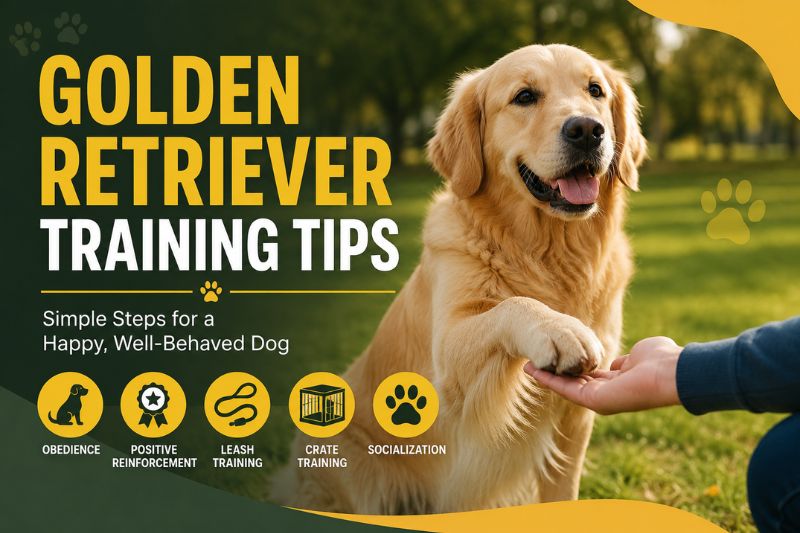
Golden Retrievers are one of the easiest dog breeds to train because they are intelligent, eager to please, and highly motivated by praise and rewards. However, even the smartest dogs require consistent guidance to develop good manners and lifelong obedience.
Whether you’ve recently welcomed a playful puppy or adopted an older Golden Retriever, proper training builds trust, improves communication, and prevents unwanted behaviors before they become habits.
In this comprehensive guide, you’ll learn the most effective Golden Retriever training tips, including basic obedience, potty training, leash walking, socialization, and positive reinforcement techniques. We’ll also cover common mistakes to avoid and recommend essential training tools that make learning easier for both you and your dog.
If you’re still learning about the breed, don’t miss our Golden Retriever Breed Guide, and if you’re raising a young puppy, our Golden Retriever Puppy Care guide provides additional advice on feeding, sleeping, and early development.
Why Training Is Important
Training isn’t just about teaching commands—it’s about creating a strong relationship between you and your dog.
A well-trained Golden Retriever is:
- Easier to manage at home and outdoors
- More confident in unfamiliar situations
- Safer around children and other pets
- Less likely to develop behavioral problems
- Happier because they understand expectations
Golden Retrievers were originally bred as working retrievers. They enjoy having a job to do, making regular training sessions mentally stimulating and highly rewarding.
According to the American Kennel Club (AKC), positive reinforcement and early socialization are among the most effective ways to raise a confident and obedient dog.
The American Veterinary Medical Association (AVMA) also emphasizes reward-based training methods that encourage good behavior without punishment:
Before You Start Training
Before teaching commands, make sure your Golden Retriever has:
- A quiet training environment
- High-value treats
- A comfortable collar or harness
- A lightweight training leash
- Plenty of exercise before sessions
Keep sessions:
- 5–10 minutes for puppies
- 10–15 minutes for adults
- Fun and positive
- Consistent every day
Always finish training on a successful command to keep your dog motivated.
Step-by-Step Golden Retriever Training
Step 1: Build Trust and Bond
Training starts with trust.
Spend time playing, grooming, feeding, and interacting with your Golden Retriever before expecting perfect obedience.
Dogs learn faster when they enjoy spending time with their owner.
Reward calm behavior throughout the day instead of only during formal training sessions.
Simple activities include:
- Gentle petting
- Fetch
- Puzzle toys
- Hand-feeding meals occasionally
- Short walks
The stronger your relationship, the easier training becomes.
Step 2: Teach Your Dog Their Name
Your dog’s name should always mean:
“Pay attention to me.”
Say your Golden Retriever’s name once.
The moment they look at you:
- Say “Yes!”
- Give a treat
- Praise enthusiastically
Repeat this several times daily.
Avoid repeating their name multiple times if they ignore you.
Instead:
- Get their attention
- Reward immediately
- End positively
Once mastered, your dog’s name becomes the foundation for all future commands.
Step 3: Master Basic Obedience Commands
Basic obedience creates a polite family companion.
Start with these commands.
Sit
Hold a treat above your dog’s nose.
Slowly move it backward.
As their head follows the treat, their bottom naturally touches the floor.
Immediately reward.
Practice:
- Before meals
- Before walks
- Before greeting guests
Stay
Ask your dog to sit.
Hold your hand up.
Say “Stay.”
Take one step backward.
Reward if they remain seated.
Increase distance gradually over several days.
Come
A reliable recall can save your dog’s life.
Use a cheerful voice.
Say:
“Come!”
Reward generously every single time they return.
Never punish your dog after calling them to you.
Down
Guide the treat from your dog’s nose to the floor.
Move it slowly outward.
When your dog lies down, reward immediately.
Leave It
Place a treat on the floor.
Cover it with your hand.
When your dog stops trying to reach it, reward with a different treat.
This command prevents dogs from eating dangerous objects outdoors.
Step 4: Potty Training
Golden Retriever puppies usually learn house training quickly with consistency.
Follow these rules:
Take them outside:
- After waking up
- After meals
- After playtime
- Before bedtime
Reward immediately after they eliminate outdoors.
Never punish accidents.
Instead:
- Clean thoroughly
- Supervise more closely
- Maintain a consistent schedule
If you’re raising a young puppy, our Golden Retriever Puppy Care provides a detailed potty training schedule.
Step 5: Leash Training
Golden Retrievers love exploring.
Without training, they often pull.
Start indoors.
Reward your dog whenever they walk beside you.
If they pull:
- Stop walking
- Wait
- Resume once the leash becomes loose
Consistency teaches that pulling never moves them forward.
Step 6: Socialization
Early socialization helps prevent fear and anxiety later in life.
Introduce your Golden Retriever to:
- Children
- Adults
- Other dogs
- Cats
- Different surfaces
- Traffic sounds
- Parks
- Veterinary clinics
- Car rides
Keep every new experience positive.
Offer treats frequently.
Never force interactions.
The American Veterinary Society of Animal Behavior (AVSAB) recommends beginning controlled socialization during puppyhood while following your veterinarian’s vaccination guidance:
Step 7: Prevent Jumping
Golden Retrievers often greet people enthusiastically.
Instead of pushing them away:
Ignore jumping completely.
Reward only when:
- Four paws remain on the floor
- They sit politely
- They remain calm
Consistency from every family member is essential.
Step 8: Stop Unwanted Chewing
Puppies naturally chew during teething.
Provide appropriate chew toys.
Redirect inappropriate chewing immediately.
Never chase your puppy.
Simply exchange the forbidden object for an approved toy.
Exercise also reduces destructive chewing caused by boredom.
Step 9: Teach Good Manners Around Food
Ask your Golden Retriever to:
- Sit
- Wait
- Make eye contact
Only then place the food bowl down.
Release them using a cue like:
“Okay!”
This teaches patience and impulse control.
For healthy rewards during training, choose nutritious treats that complement your dog’s regular diet. Our Best Foods for Golden Retrievers guide explains how to balance treats with complete nutrition.
Step 10: Continue Advanced Training
Once basic commands are mastered, teach:
- Heel
- Place
- Fetch specific items
- Spin
- Shake hands
- Roll over
- Stay with distractions
- Off-leash recall (only in safe, enclosed areas)
Golden Retrievers excel in:
- Agility
- Therapy work
- Search and rescue
- Obedience competitions
Regular mental stimulation keeps them happy throughout adulthood.
Common Behavioral Problems and Solutions
Pulling on the Leash
Cause:
Excitement.
Solution:
Reward loose-leash walking consistently.
Excessive Barking
Cause:
Boredom or excitement.
Solution:
Increase physical exercise and mental enrichment.
Jumping on Guests
Cause:
Seeking attention.
Solution:
Ignore jumping and reward calm greetings.
Chewing Furniture
Cause:
Teething or insufficient exercise.
Solution:
Provide chew toys and rotate them regularly.
Not Coming When Called
Cause:
Recall has become associated with ending fun.
Solution:
Reward generously every time.
Never use “Come” before punishment.
Common Training Mistakes to Avoid
Even experienced owners sometimes make training harder than it needs to be. Avoid these common mistakes:
Being Inconsistent
If one family member allows jumping while another discourages it, your dog receives mixed signals.
Everyone should use the same commands and expectations.
Repeating Commands
Instead of saying “Sit, sit, sit,” give the command once and guide your dog if needed.
Repeating commands teaches dogs they can ignore the first request.
Training for Too Long
Golden Retrievers enjoy learning, but long sessions can reduce focus. Keep lessons short, fun, and engaging.
Punishing Mistakes
Harsh corrections can damage trust and slow learning. Reward the behavior you want rather than focusing on what you don’t.
Skipping Daily Practice
Training is an ongoing process. Practicing a few minutes every day is more effective than one long session each week.
Recommended Training Tools
The right equipment can make training easier and more enjoyable for both you and your Golden Retriever.
Training Treats
Small, soft treats help keep your Golden Retriever focused without interrupting the training session. Look for treats made with high-quality ingredients and avoid those with excessive artificial colors or fillers.
Recommended on Amazon:
👉 Zuke’s Mini Naturals Dog Training Treats
Why we recommend it:
- Available in multiple flavors
- Soft and easy to chew
- Low calorie (about 2 calories per treat)
- Ideal for repetitive training sessions
Clicker
A clicker marks the exact moment your dog performs the correct behavior, making training easier and more consistent.
Recommended on Amazon:
👉 PetSafe Clik-R Dog Training Clicker
Why we recommend it:
- Suitable for beginners
- Comfortable ergonomic design
- Loud, consistent click
- Includes finger strap
Training Leash
A standard 4–6 foot leash provides better control than a retractable leash during obedience training.
Recommended on Amazon:
👉 PetSafe Nylon Dog Training Leash (6 ft)
Why we recommend it:
- Affordable
- Durable nylon construction
- Comfortable grip
- Excellent for loose-leash walking
Chew Toys
Golden Retriever puppies love chewing, especially during teething. Durable chew toys help redirect destructive chewing behavior.
Recommended on Amazon:
Why we recommend it:
- Veterinarian recommended
- Extremely durable
- Can be stuffed with treats
- Reduces boredom
Crate
A properly sized crate supports house training, provides a safe resting place, and helps establish a predictable routine. Introduce the crate gradually so your dog associates it with positive experiences.
Recommended on Amazon:
👉 MidWest Homes for Pets iCrate
Why we recommend it:
- Divider panel for growing puppies
- Leak-proof tray
- Easy to fold and transport
- One of Amazon’s best-selling dog crates
| Product | Best For | Our Rating |
|---|---|---|
| Zuke’s Mini Naturals | Training Treats | ⭐⭐⭐⭐⭐ |
| PetSafe Clik-R | Clicker Training | ⭐⭐⭐⭐⭐ |
| PetSafe 6 ft Leash | Loose Leash Walking | ⭐⭐⭐⭐☆ |
| KONG Classic | Chewing & Mental Stimulation | ⭐⭐⭐⭐⭐ |
| MidWest iCrate | Crate Training | ⭐⭐⭐⭐⭐ |
Frequently Asked Questions
At what age should I start training my Golden Retriever?
Training can begin as early as 8 weeks of age. Young puppies learn quickly through short, positive sessions.
How long does it take to train a Golden Retriever?
Most Golden Retrievers learn basic obedience within a few weeks of consistent daily practice. Advanced skills and reliable behavior around distractions may take several months.
Are Golden Retrievers easy to train?
Yes. They are widely considered one of the easiest breeds to train because of their intelligence, eagerness to please, and strong food motivation.
Should I use punishment during training?
No. Positive reinforcement methods are more effective and help build trust while reducing fear and anxiety.
How often should I train my Golden Retriever?
Aim for two or three short sessions each day. Consistent practice is more effective than occasional long sessions.
What are the best treats for training?
Choose soft, bite-sized treats that your dog loves and can eat quickly. Reduce meal portions slightly if you’re using many treats throughout the day.
Can older Golden Retrievers still learn new commands?
Absolutely. Adult and senior Golden Retrievers can continue learning throughout their lives with patience, consistency, and positive reinforcement.
Final Thoughts
Training a Golden Retriever is one of the most rewarding parts of dog ownership. Thanks to their intelligence, friendly nature, and eagerness to please, they respond exceptionally well to patient, reward-based methods.
Start with the basics, keep training sessions short and enjoyable, and practice consistently every day. Celebrate small successes, remain patient during setbacks, and remember that good behavior develops over time through repetition and positive experiences.
As your dog progresses, continue reinforcing learned behaviors while introducing new challenges to keep them mentally stimulated. With dedication and consistency, your Golden Retriever can become a well-mannered, confident, and happy companion for years to come.