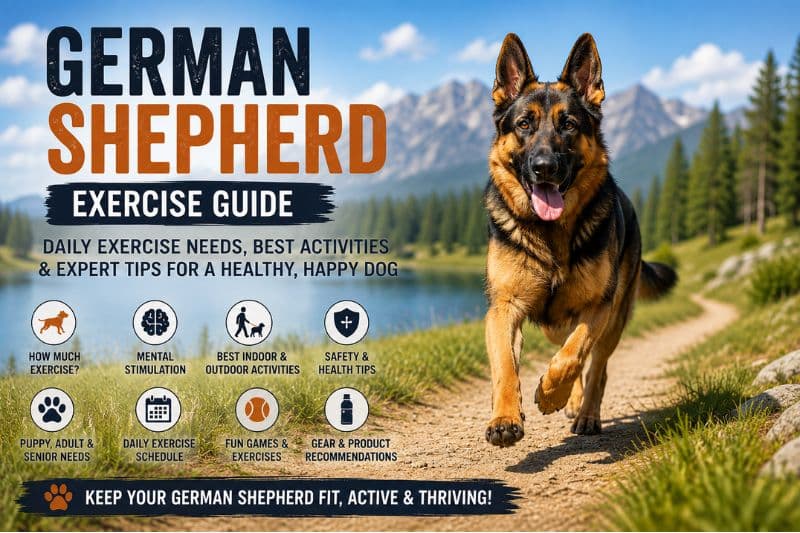
If you’re wondering how much exercise your dog really needs, this German Shepherd Exercise Guide has everything you need to know. German Shepherds are one of the most energetic, intelligent, and athletic dog breeds in the world. According to the American Kennel Club (AKC), the breed was originally developed as a working dog and thrives on daily physical activity and mental challenges, making regular exercise essential for both physical and behavioral health.
Without enough activity, a German Shepherd can quickly become bored, anxious, overweight, or destructive. On the other hand, exercising too much—especially during puppyhood—can increase the risk of joint injuries and long-term orthopedic problems.
Finding the right balance is essential. The ideal exercise routine depends on your dog’s age, health, lifestyle, and fitness level.
In this complete guide, you’ll learn:
- How much exercise German Shepherds need at every life stage
- The best indoor and outdoor activities
- Daily exercise schedules
- Signs of overexercise and underexercise
- Seasonal exercise tips
- Safety recommendations from veterinarians and trainers
- Recommended products to make exercising safer and more enjoyable
Whether you have a playful puppy, an active adult, or a senior companion, this guide will help you create a healthy exercise routine that keeps your German Shepherd happy for years to come. If you’re new to the breed, start with our German Shepherd Breed Guide to learn about their temperament, personality, care requirements, and overall characteristics before creating an exercise routine.
Quick Answer
An adult German Shepherd typically requires 90–120 minutes of exercise every day, including brisk walks, running, structured play, obedience training, and mentally stimulating activities. Puppies need several short play sessions rather than long walks, while senior German Shepherds benefit from low-impact exercise such as leisurely walks and swimming. Combining physical exercise with mental enrichment is the best way to keep this intelligent breed healthy and well-behaved.
Table of Contents
- Why Exercise Is Important
- German Shepherd Exercise Requirements by Age
- Daily Exercise Schedule
- Best Exercises for German Shepherds
- Indoor Exercise Ideas
- Outdoor Exercise Ideas
- Mental Stimulation
- Seasonal Exercise Tips
- Signs of Too Much Exercise
- Signs Your German Shepherd Needs More Exercise
- Common Exercise Mistakes
- Safety Tips
- Recommended Exercise Products
- Veterinarian & Trainer Tips
- Frequently Asked Questions
Why Exercise Is Important
German Shepherds are among the most active working breeds. They were originally developed to herd livestock, patrol large areas, and perform physically demanding tasks. Even today, they serve as police dogs, military dogs, search-and-rescue dogs, and service animals because of their exceptional stamina and intelligence.
The American Kennel Club (AKC) also recommends providing German Shepherds with consistent exercise and mentally stimulating activities to help prevent boredom and destructive behaviors.
This heritage means they require significantly more daily activity than many other breeds.
Proper exercise provides benefits that go far beyond simply burning calories.
Maintains a Healthy Weight
Regular exercise helps prevent obesity, one of the leading causes of health problems in dogs. Maintaining a healthy body condition reduces stress on joints, improves mobility, and lowers the risk of diabetes and heart disease.
If your German Shepherd has started gaining weight, pairing regular exercise with a balanced diet can make a significant difference. For nutrition advice, see our Best Food for German Shepherd and German Shepherd Feeding Guide.
Builds Strong Muscles
Walking, hiking, swimming, and running strengthen the muscles that support the hips, knees, shoulders, and spine.
Strong muscles help stabilize joints and may reduce the risk of injuries during everyday activities.
Supports Joint Health
Although German Shepherds are naturally athletic, they are genetically predisposed to conditions such as hip dysplasia and elbow dysplasia.
Moderate, consistent exercise keeps joints lubricated and muscles strong without placing excessive stress on developing bones. Regular grooming is equally important for active dogs. Brushing helps remove dirt, loose undercoat, and debris collected during outdoor adventures. Learn more in our German Shepherd Grooming Guide.
High-impact activities should always be limited during puppyhood.
Improves Cardiovascular Health
Daily aerobic exercise strengthens the heart and lungs, increases endurance, improves circulation, and boosts overall fitness.
Dogs that stay active often recover faster after strenuous activities and maintain better stamina throughout adulthood.
Prevents Behavioral Problems
Many unwanted behaviors stem from boredom rather than disobedience.
Without adequate exercise, German Shepherds may develop:
- Excessive barking
- Digging
- Furniture chewing
- Jumping on guests
- Hyperactivity
- Destructive behavior
- Escaping from yards
A tired German Shepherd is usually a calm, well-behaved companion.
Provides Mental Stimulation
German Shepherds are exceptionally intelligent. Physical activity alone isn’t enough.
Activities such as scent games, obedience training, agility, puzzle toys, and hide-and-seek challenge their minds and help prevent frustration.
Mental enrichment is just as important as physical exercise.
Promotes Better Sleep
Dogs that receive appropriate exercise tend to sleep more soundly, recover faster, and maintain more balanced energy levels throughout the day.
Strengthens Your Bond
Daily walks, games of fetch, and training sessions create trust and improve communication between you and your dog.
Exercise isn’t just about fitness—it’s also quality time together.
German Shepherd Exercise Requirements by Age
Exercise needs change dramatically as your German Shepherd grows. Puppies need controlled activity to protect developing joints, while healthy adults require much more vigorous exercise.
The table below provides general recommendations.
| Age | Recommended Exercise | Notes |
|---|---|---|
| 8–12 weeks | 15–20 minutes, 3–4 times daily | Gentle play and exploration |
| 3–6 months | 30–45 minutes total daily | Avoid repetitive jumping |
| 6–12 months | 45–60 minutes daily | Increase activity gradually |
| 1–7 years | 90–120 minutes daily | Combination of walking, running, training, games |
| 7+ years | 30–60 minutes daily | Low-impact activities based on health |
Remember that these are general guidelines. Every dog is different, so adjust exercise according to your veterinarian’s recommendations and your dog’s overall fitness.
German Shepherd Puppies
Puppies have plenty of energy but are still developing physically.
Their growth plates remain open until approximately 12–18 months of age, making excessive impact potentially harmful.
Recommended activities include:
- Short walks
- Gentle fetch
- Socialization outings
- Basic obedience training
- Interactive toys
- Short play sessions
- Exploring new environments
Avoid:
- Long-distance running
- Stair climbing repeatedly
- High jumps
- Agility courses
- Intense frisbee sessions
A good rule of thumb is about 5 minutes of structured exercise per month of age, up to twice daily, while allowing free play at home.
For more puppy-specific care tips, read our German Shepherd Puppy Care Guide.
Adolescent German Shepherds
Teenage German Shepherds are often full of energy and curiosity.
This is an ideal time to begin:
- Longer walks
- Hiking
- Controlled jogging
- Advanced obedience
- Recall training
- Scent work
- Beginner agility foundations
Their muscles develop rapidly during this stage, but strenuous impact should still be increased gradually.
Adult German Shepherds
Healthy adult German Shepherds generally require 90–120 minutes of activity every day.
An effective routine combines:
- Brisk walking
- Running
- Off-leash play (in secure areas)
- Fetch
- Obedience sessions
- Puzzle games
- Hiking
- Swimming
Mixing different activities prevents boredom while exercising different muscle groups.
Senior German Shepherds
Older dogs often experience arthritis or reduced mobility but still need daily movement.
Suitable activities include:
- Gentle walks
- Swimming
- Slow hiking
- Stretching exercises
- Light obedience training
- Nose work
- Puzzle feeders
Avoid sudden bursts of intense activity.
Always monitor for stiffness or signs of discomfort and consult your veterinarian if mobility changes.
Daily Exercise Schedule
Creating a consistent daily routine helps your German Shepherd stay physically fit while preventing boredom.
Here’s an example schedule for a healthy adult dog.
| Time | Activity | Duration |
|---|---|---|
| Morning | Brisk walk + obedience practice | 35–40 minutes |
| Midday | Puzzle toy or scent game | 15–20 minutes |
| Afternoon | Fetch, tug, agility, or running | 25–35 minutes |
| Evening | Relaxed walk and mental training | 25–35 minutes |
This combination provides approximately 90–120 minutes of daily exercise while balancing physical activity with mental enrichment.
Dogs participating in sports such as agility, protection work, or search-and-rescue may require additional conditioning and recovery time.
Best Exercises for German Shepherds
German Shepherds are highly active working dogs that thrive on variety. Repeating the same walk every day can quickly become boring, even if it meets their physical exercise needs. The ideal routine combines cardiovascular activity, strength-building exercises, problem-solving tasks, and interactive play.
The following activities help keep your German Shepherd physically fit, mentally stimulated, and emotionally balanced.
| Activity | Difficulty | Benefits | Frequency | Precautions |
|---|---|---|---|---|
| Walking | Easy | Cardiovascular health, weight management | Daily | Avoid hot pavement |
| Running | Moderate | Endurance, stamina | 2–4 times/week | Wait until growth plates are fully developed |
| Swimming | Moderate | Low-impact exercise, joint support | Weekly | Always supervise around water |
| Fetch | Easy | Burns energy, improves recall | Several times/week | Avoid repetitive high jumps |
| Frisbee | Moderate | Agility and coordination | 1–3 times/week | Use soft discs and limit jumping |
| Hiking | Moderate | Physical and mental enrichment | Weekly | Carry water and check paws afterward |
| Agility Training | Advanced | Confidence, obedience, athleticism | Weekly | Introduce obstacles gradually |
| Tug Games | Easy | Builds confidence and strengthens bond | Several times/week | Teach a reliable “drop it” command |
| Hide and Seek | Easy | Mental stimulation | Weekly | Keep sessions short and fun |
| Scent Work | Easy | Excellent brain exercise | Daily | Use treats or favorite toys |
| Obstacle Courses | Moderate | Coordination and confidence | Weekly | Avoid slippery surfaces |
Walking
Walking is the foundation of every German Shepherd’s exercise routine. Even highly active dogs benefit from structured daily walks because they provide both physical exercise and opportunities to explore new sights, sounds, and scents.
Every walk is also a valuable training opportunity. Practicing commands such as heel, sit, stay, and recall during walks provides excellent mental stimulation while reinforcing good behavior. Our German Shepherd Training Guide explains how to build these essential skills using positive reinforcement.
Benefits
- Improves cardiovascular fitness
- Supports healthy joints
- Helps maintain ideal body weight
- Reduces stress and anxiety
- Reinforces leash manners
Recommended Duration
- Puppies: 15–30 minutes
- Adolescents: 30–60 minutes
- Adults: 60–90 minutes (split into two walks if needed)
- Seniors: 20–45 minutes at a comfortable pace
Tip: Allow your dog time to sniff during walks. Sniffing is mentally enriching and can be just as tiring as physical exercise.
Running
Healthy adult German Shepherds make excellent jogging or running partners once they have finished growing, usually between 18 and 24 months of age.
Running improves endurance and burns energy efficiently.
Benefits
- Strengthens muscles
- Improves cardiovascular health
- Builds stamina
- Prevents obesity
Precautions
Avoid running:
- During hot weather
- On hard pavement for long distances
- With puppies whose joints are still developing
Start with short distances and gradually increase intensity over several weeks.
Swimming
Swimming is one of the safest forms of exercise for German Shepherds, particularly for older dogs or those with joint problems.
Because water supports body weight, swimming provides an excellent workout while placing minimal stress on hips and elbows.
Benefits
- Low-impact exercise
- Strengthens muscles
- Improves endurance
- Keeps dogs cool during summer
- Excellent rehabilitation activity
Safety Tips
- Introduce water gradually.
- Use a canine life jacket if swimming in lakes or rivers.
- Rinse your dog after swimming to remove chlorine or saltwater.
- Never force a reluctant dog into the water.
Fetch
Few activities burn energy as effectively as a good game of fetch.
It encourages sprinting, improves recall, and strengthens your relationship with your dog.
Best Toys
Tips
- Keep sessions to 10–20 minutes.
- Avoid excessive jumping.
- Stop if your dog begins limping or appears fatigued.
Frisbee
Frisbee combines speed, agility, and coordination, making it an exciting activity for energetic German Shepherds.
However, repeated high jumps can stress joints.
Benefits
- Improves coordination
- Enhances athletic ability
- Excellent bonding activity
- Builds confidence
Best Practice
Roll the Frisbee along the ground for beginners before encouraging airborne catches.
Hiking
German Shepherds were bred to travel long distances alongside humans, making hiking one of their favorite activities.
New environments provide physical exercise while stimulating their senses.
Benefits
- Excellent full-body workout
- Mental enrichment
- Confidence building
- Socialization opportunities
Hiking Checklist
- Water
- Portable dog bowl
- First-aid kit
- Waste bags
- Tick remover
- GPS collar
- Comfortable harness
Inspect your dog’s paws after every hike for cuts or embedded debris.
Agility Training
Agility is one of the best sports for German Shepherds because it combines obedience, confidence, speed, and athleticism.
Begin with simple obstacles before progressing to jumps and tunnels.
Benefits
- Improves balance
- Strengthens muscles
- Enhances communication
- Provides outstanding mental stimulation
Remember that formal agility involving jumps should only begin once your veterinarian confirms skeletal maturity.
Tug Games
Contrary to popular belief, tug is not harmful when played correctly.
In fact, it teaches impulse control and strengthens the bond between dog and owner.
Rules
- Start on command.
- End on command.
- Teach “Drop it.”
- Never jerk the toy aggressively.
- Use toys designed specifically for tugging.
Hide and Seek
Hide-and-seek transforms obedience into an exciting game.
Hide somewhere in your home or yard and call your dog to find you.
This simple activity exercises both the body and brain.
You can also hide favorite toys or treats for an added challenge.
Scent Work
German Shepherds possess an exceptional sense of smell.
Scent games engage their natural instincts and provide intense mental exercise.
Easy scent games include:
- Finding hidden treats
- Locating favorite toys
- Snuffle mats
- Tracking scent trails
- Beginner nose work exercises
Just 15 minutes of scent work can tire many dogs more effectively than a long walk.
Backyard Obstacle Courses
You don’t need expensive agility equipment to create a fun obstacle course.
Use household items such as:
- Traffic cones
- PVC pipes
- Cardboard boxes
- Pool noodles
- Small tunnels
- Platforms
- Balance boards
Guide your dog through each obstacle using treats and praise.
Always prioritize safety over speed.
Indoor Exercise Ideas
Bad weather doesn’t have to mean skipping exercise. Indoor activities can keep your German Shepherd mentally and physically engaged while protecting them from extreme temperatures.
Puzzle Toys
Puzzle toys encourage problem-solving by rewarding your dog with treats when they solve challenges.
Benefits include:
- Mental stimulation
- Reduced boredom
- Slower eating
- Increased confidence
Hallway Fetch
A hallway provides a safe space for short games of fetch when outdoor exercise isn’t possible.
Choose soft toys to protect walls and furniture.
Hide Treats Around the House
Scatter treats in different rooms and encourage your dog to “Find it.”
This taps into their incredible sense of smell and provides excellent mental enrichment.
Short Training Sessions
Practice commands such as:
- Sit
- Stay
- Down
- Heel
- Leave it
- Place
- Recall
Five to ten minutes of focused training several times a day can be surprisingly tiring for an intelligent breed like the German Shepherd.
Interactive Toys
Electronic toys and treat-dispensing toys keep dogs entertained while encouraging independent play.
Rotate toys every few days to maintain interest.
Treadmill Training
Some German Shepherds enjoy treadmill exercise once properly trained.
Introduce the treadmill slowly:
- Let your dog inspect it while turned off.
- Reward calm behavior.
- Start at the slowest speed.
- Never tie your dog to the treadmill.
- Always supervise.
A treadmill should supplement—not replace—regular outdoor walks.
Indoor Obedience Games
Turn everyday obedience into fun challenges:
- Recall races
- “Go to your bed”
- Find family members
- Toy identification games
- Name recognition exercises
These activities strengthen communication while providing valuable mental exercise.
Outdoor Exercise Ideas
Outdoor adventures provide sensory experiences that indoor activities simply can’t replicate.
Changing environments prevents boredom and builds confidence.
Neighborhood Walks
Daily neighborhood walks remain the most important outdoor activity.
Vary your route regularly to introduce new sights, sounds, and smells.
Dog Parks
Dog parks can provide excellent socialization and exercise, provided your dog is well-socialized and responsive to commands.
Avoid parks if:
- Your dog is fearful or reactive.
- Other dogs display aggressive behavior.
- Vaccinations are incomplete.
Always supervise interactions closely.
Hiking Trails
Nature trails combine exercise with exploration.
Allow your German Shepherd to sniff, climb gentle hills, and investigate the environment while remaining safely leashed where required.
Swimming Areas
If your local area has dog-friendly lakes or beaches, swimming can become a favorite weekly activity.
Always check water quality and current conditions before entering natural bodies of water.
Backyard Games
Your backyard can become an excellent fitness space.
Try:
- Fetch
- Tug
- Hide-and-seek
- Obstacle courses
- Recall games
- Scent trails
- Frisbee
Even 20–30 minutes of structured backyard play can burn significant energy.
Adventure Walks
Instead of following the same route every day, occasionally visit:
- Forest trails
- Dog-friendly parks
- Beaches
- Nature reserves
- Open fields
- Pet-friendly campgrounds
Novel environments provide mental stimulation that complements physical exercise.
Combining Physical and Mental Exercise
The healthiest German Shepherds don’t just exercise—they think while they exercise.
For example:
- Practice obedience during walks.
- Ask for sits before throwing a ball.
- Hide toys along a hiking trail.
- Incorporate recall into fetch games.
- Reward calm behavior around distractions.
This combination helps prevent boredom while reinforcing good manners.
Mental Exercise Is Just as Important
Physical exercise alone isn’t enough for a German Shepherd. Ranked among the most intelligent dog breeds, German Shepherds were developed to solve problems, make independent decisions, and work closely with humans. Without regular mental challenges, even a physically tired dog may become bored and develop unwanted behaviors.
In fact, 15–20 minutes of focused mental stimulation can be as tiring as a long walk for many dogs.
Combining physical and mental exercise helps create a calm, confident, and well-balanced companion.
Obedience Training
Training sessions are one of the easiest ways to exercise your dog’s brain.
Practice commands such as:
- Sit
- Stay
- Down
- Heel
- Recall
- Place
- Leave It
- Wait
Keep sessions short—around 5 to 10 minutes—and always end on a positive note.
As your dog progresses, introduce distractions to improve focus and reliability.
Puzzle Feeders
Instead of serving meals in a regular bowl, use puzzle feeders that encourage your German Shepherd to work for their food.
Benefits include:
- Slower eating
- Better digestion
- Increased problem-solving
- Reduced boredom
- Longer meal times
Puzzle feeders are especially helpful for dogs that eat too quickly.
Snuffle Mats
A snuffle mat mimics natural foraging behavior by hiding treats or kibble among fabric strips.
Your dog must use their nose to locate every piece of food.
This activity:
- Builds confidence
- Reduces anxiety
- Provides excellent mental stimulation
- Encourages natural instincts
Scent Games
German Shepherds possess an extraordinary sense of smell.
Simple scent games include:
- Finding hidden treats
- Tracking a favorite toy
- Following scent trails
- Identifying different scents
- Beginner nose work exercises
Scent work is one of the most rewarding activities for this breed because it taps into their natural abilities.
Learning New Tricks
Never stop teaching your German Shepherd.
Learning new tricks strengthens communication while keeping their brain active.
Ideas include:
- Spin
- Roll over
- Shake hands
- Bow
- Retrieve named toys
- Ring a bell
- Put toys away
- Close doors
- Turn lights on (advanced)
Food-Dispensing Toys
Interactive treat toys encourage independent problem-solving.
Rotate different toys throughout the week to prevent boredom.
Popular options include:
- Treat balls
- Slow feeders
- Puzzle cubes
- Interactive dispensers
Toy Rotation
Many owners leave every toy available all the time.
Instead, rotate toys every few days.
This simple strategy makes old toys feel new again and keeps your German Shepherd interested without buying additional toys.
Short Training Throughout the Day
Rather than one long session, include small challenges during daily activities.
For example:
- Ask for a sit before meals.
- Practice recall during walks.
- Request a down before opening doors.
- Reward calm behavior before throwing a ball.
These mini training sessions reinforce good manners while keeping your dog’s mind engaged.
Seasonal Exercise Tips
German Shepherds can adapt to a variety of climates, but seasonal changes should influence your exercise routine. Adjusting activities based on the weather helps prevent heatstroke, dehydration, frostbite, and paw injuries.
Spring
Spring is one of the best seasons for outdoor adventures.
Ideal activities include:
- Longer walks
- Hiking
- Park visits
- Beginner agility
- Outdoor training sessions
Watch Out For
- Seasonal allergies
- Ticks
- Fleas
- Muddy trails
Check your dog’s coat and paws after outdoor activities.
Summer
Although German Shepherds tolerate warm weather reasonably well, they can overheat quickly during intense exercise.
Best Practices
- Exercise early in the morning.
- Walk after sunset.
- Carry fresh water.
- Take frequent breaks.
- Choose shaded routes.
- Use cooling products when necessary.
Avoid
- Midday exercise
- Hot pavement
- Long runs in direct sunlight
A simple test: place the back of your hand on the pavement for 7 seconds. If it’s too hot for your hand, it’s too hot for your dog’s paws.
Signs of heatstroke require immediate veterinary attention.
Fall
Cooler temperatures make autumn ideal for active German Shepherds.
Great activities include:
- Hiking
- Running
- Fetch
- Agility
- Long neighborhood walks
Be aware of:
- Wet leaves (slippery surfaces)
- Hunting seasons in some areas
- Shorter daylight hours
Reflective gear improves visibility during evening walks.
Winter
Healthy German Shepherds generally tolerate cold weather well thanks to their dense double coat.
However, prolonged exposure to freezing temperatures can still be dangerous.
Winter Tips
- Reduce time outdoors during severe cold.
- Dry paws after walks.
- Remove ice between paw pads.
- Use paw balm if needed.
- Shorten walks during snowstorms.
Older dogs and puppies may require dog coats in extremely cold climates.
Signs Your German Shepherd Is Getting Too Much Exercise
More exercise isn’t always better. Overexercising can lead to injuries, chronic joint problems, and exhaustion.
Watch for the following warning signs.
Excessive Panting
Heavy panting that continues long after exercise may indicate overheating or overexertion.
Limping
Any limping should be taken seriously.
Stop exercising immediately and monitor your dog.
Persistent limping requires a veterinary examination.
Reluctance to Walk
A German Shepherd that suddenly refuses walks or struggles to keep pace may be experiencing pain, fatigue, or injury.
Muscle Stiffness
Difficulty getting up after exercise often indicates sore muscles or joint discomfort.
Extreme Fatigue
Your dog should recover within a reasonable time after exercise.
Sleeping longer than usual after unusually intense activity may simply reflect fatigue, but persistent lethargy deserves attention.
Heat Exhaustion
Symptoms include:
- Heavy panting
- Drooling
- Bright red gums
- Vomiting
- Weakness
- Collapse
Heat exhaustion is a medical emergency.
Dehydration
Look for:
- Dry gums
- Sunken eyes
- Loss of skin elasticity
- Thick saliva
Always provide fresh water before, during, and after exercise.
Signs Your German Shepherd Needs More Exercise
Insufficient exercise often causes behavioral problems before physical ones.
If your German Shepherd isn’t getting enough activity, you may notice:
Destructive Chewing
Furniture, shoes, doors, and household items become targets for bored dogs.
Excessive Barking
Many German Shepherds bark simply because they have excess energy.
Increasing daily exercise often reduces unnecessary vocalization.
Hyperactivity
A dog that constantly paces, jumps, or cannot settle down may need more structured exercise.
Weight Gain
Reduced activity combined with excessive calorie intake commonly leads to obesity.
If your dog is gaining weight, review both diet and exercise.
Restlessness
Dogs that constantly wander around the house, seek attention, or seem unable to relax often benefit from additional physical and mental stimulation.
Digging
Digging is a natural behavior but can become excessive when dogs are bored.
Interactive play and scent games often reduce this behavior.
Attention-Seeking
Constant nudging, pawing, whining, or demanding play may indicate your dog needs more engagement.
Common Exercise Mistakes
Even experienced owners occasionally make mistakes that can affect their dog’s health.
Avoid these common problems.
Exercising Immediately After Meals
Vigorous activity shortly before or after eating may increase the risk of gastric dilatation-volvulus (bloat), a life-threatening emergency that large, deep-chested breeds like German Shepherds are predisposed to.
Wait approximately 1–2 hours after a full meal before strenuous exercise.
Overexercising Puppies
Growing puppies should not participate in:
- Long-distance running
- High jumps
- Repetitive stair climbing
- Intense agility
Their developing joints need time to mature.
For age-specific recommendations, see our German Shepherd Puppy Care Guide.
Ignoring Weather Conditions
Hot pavement, high humidity, freezing temperatures, and icy surfaces all increase injury risk.
Always adjust exercise to the weather.
Skipping Warm-Up and Cool-Down
Just like people, dogs benefit from gradually increasing and decreasing activity.
Begin with a slow walk before running and finish with a relaxed walk afterward.
Forgetting Water
Hydration is essential, especially during hikes or long walks.
Carry a portable dog water bottle whenever exercising outdoors.
Walking on Hot Pavement
Hot asphalt can burn paw pads within seconds.
Whenever possible:
- Walk on grass.
- Use shaded paths.
- Exercise during cooler hours.
Using Retractable Leashes in Busy Areas
Retractable leashes reduce control and increase the risk of accidents.
For daily walks, a standard leash with a well-fitted harness is usually the safer option.
Exercise Safety Tips
A few simple precautions can help prevent injuries and ensure every outing is enjoyable.
Keep Your Dog Hydrated
Offer water:
- Before exercise
- During long activities
- Immediately afterward
Never wait until your dog appears thirsty.
Prevent Heatstroke
The American Veterinary Medical Association (AVMA) advises pet owners to avoid strenuous exercise during periods of extreme heat, provide continuous access to fresh water, and recognize the early warning signs of heatstroke before they become life-threatening.
Provide shade and frequent water breaks.
Know the early signs of overheating.
Protect the Paws
Check paw pads after every walk for:
- Cuts
- Burns
- Ice buildup
- Thorns
- Splinters
Paw balm can help prevent dryness and cracking.
Use Proper Equipment
Choose:
- A comfortable harness
- A durable leash
- Reflective gear for nighttime walks
- Identification tags
- A GPS collar for hiking adventures
Proper equipment improves both safety and comfort.
Stay Up to Date on Preventive Care
Before visiting dog parks, hiking trails, or other public spaces, ensure your German Shepherd is current on:
- Vaccinations
- Flea prevention
- Tick prevention
- Heartworm prevention (where recommended)
Routine veterinary checkups are just as important as daily exercise. Early detection of orthopedic conditions, heart disease, and other health concerns allows your dog to remain active safely. For a complete overview of common medical conditions, read our German Shepherd Health Guide.
Preventive healthcare plays an important role in maintaining an active lifestyle. The American Animal Hospital Association (AAHA) recommends routine wellness examinations to identify health issues early and keep pets healthy throughout every stage of life.
Recognize Fatigue Early
Every dog has limits.
If your German Shepherd begins slowing down, lagging behind, or showing signs of discomfort, end the session and allow time to recover.
Consistency is far healthier than occasional overexertion.
Recommended Exercise Products
The right equipment can make exercising your German Shepherd safer, more enjoyable, and more effective. While premium gear isn’t essential, investing in quality products improves comfort, safety, and durability—especially for an active breed like the German Shepherd.
| Product Category | Purpose | Guides |
|---|---|---|
| Comfortable Dog Harness | Better control and reduced neck strain | Best Dog Harnesses |
| Durable Dog Leash | Daily walks and training | Best Dog Leashes |
| GPS Dog Collar | Hiking and outdoor adventures | Best GPS Dog Collars |
| Interactive Dog Toy | Mental stimulation | Best Interactive Dog Toys |
| Ball Launcher | Fetch sessions | Best Fetch Toys for Dogs |
| Puzzle Toy | Brain games and enrichment | Best Puzzle Toys for Dogs |
| Portable Dog Water Bottle | Hydration during walks | Best Dog Water Bottles |
| Cooling Vest | Summer exercise safety | Best Dog Cooling Vests |
What to Look For
Harness
- Padded chest straps
- Adjustable fit
- Reflective stitching
- Front and back leash clips
Leash
- Strong nylon or leather
- Comfortable handle
- 4–6 feet in length for daily walks
GPS Collar
- Real-time location tracking
- Waterproof design
- Long battery life
Interactive Toys
- Durable materials
- Appropriate size for large breeds
- Easy to clean
Portable Water Bottle
- Leak-proof
- Easy one-hand operation
- BPA-free materials
These product categories naturally fit into your affiliate content strategy while providing genuine value to readers.
Exercise Tips from Veterinarians & Professional Trainers
Veterinarians and certified dog trainers agree that consistent, age-appropriate exercise is one of the most important aspects of keeping a German Shepherd healthy.
Here are some expert-backed recommendations:
Start Slowly
If your dog has been inactive, gradually increase exercise over several weeks rather than jumping into long hikes or runs.
Match Exercise to Age
Puppies, adults, and senior dogs all have different exercise needs. Overexercising a growing puppy can damage developing joints, while senior dogs often benefit from shorter, low-impact activities.
Combine Physical and Mental Exercise
A long walk is beneficial, but pairing it with obedience training, scent work, or puzzle toys provides even greater physical and mental enrichment.
Exercise During Cooler Hours
In warm weather, choose early morning or evening walks to reduce the risk of overheating and heatstroke.
Warm Up and Cool Down
Begin each session with a few minutes of relaxed walking and finish the same way to help reduce muscle strain.
Monitor Body Condition
You should be able to feel—but not prominently see—your dog’s ribs. Maintaining an ideal body weight reduces stress on joints and lowers the risk of obesity-related diseases.
Consult Your Veterinarian
Speak with your veterinarian before starting an intensive exercise program if your German Shepherd has:
- Hip dysplasia
- Elbow dysplasia
- Arthritis
- Heart disease
- Respiratory conditions
- Obesity
- Recent surgery or injury
A personalized exercise plan can help your dog stay active safely. The World Small Animal Veterinary Association (WSAVA) also emphasizes that exercise, nutrition, preventive healthcare, and regular wellness examinations should work together to support lifelong canine health and wellbeing.
Frequently Asked Questions
1. How much exercise does a German Shepherd need every day?
Healthy adult German Shepherds typically need 90–120 minutes of daily exercise, combining brisk walks, play, training, and mental stimulation.
2. How much exercise does a German Shepherd puppy need?
A common guideline is 5 minutes of structured exercise per month of age, up to twice daily, along with supervised free play.
3. Can a German Shepherd go running?
Yes. Healthy adult German Shepherds can make excellent running partners once their growth plates have fully developed, usually between 18 and 24 months of age.
4. Is walking enough for a German Shepherd?
Walking is important, but most German Shepherds also need mentally stimulating activities such as obedience training, scent work, fetch, or puzzle toys to remain happy and well-balanced.
5. Is swimming good for German Shepherds?
Yes. Swimming is an excellent low-impact exercise that strengthens muscles while reducing stress on joints. Always supervise your dog around water.
6. What happens if a German Shepherd doesn’t get enough exercise?
Insufficient exercise can contribute to:
- Weight gain
- Excessive barking
- Hyperactivity
- Destructive chewing
- Digging
- Anxiety
- Restlessness
7. Can I exercise my dog immediately after eating?
No. Wait approximately 1–2 hours after a full meal before vigorous exercise to help reduce the risk of gastric dilatation-volvulus (bloat).
8. What’s the best time of day to exercise?
Morning and evening are generally the safest times, particularly during warmer months when temperatures are lower.
9. How can I exercise my German Shepherd indoors?
Indoor options include:
- Puzzle toys
- Hide-and-seek
- Hallway fetch
- Obedience training
- Scent games
- Food-dispensing toys
- Treadmill training (with supervision)
10. How do I know if my dog is getting too much exercise?
Watch for signs such as:
- Limping
- Persistent heavy panting
- Fatigue
- Reluctance to walk
- Muscle stiffness
- Excessive thirst
- Heat exhaustion
If symptoms persist, stop exercising and contact your veterinarian.
Final Thoughts
German Shepherds are energetic, intelligent working dogs that thrive when their daily routine includes both physical activity and mental enrichment. While healthy adults generally require 90–120 minutes of exercise each day, puppies and senior dogs need routines tailored to their age, growth, and overall health.
Consistency is more important than intensity. A balanced schedule that combines walks, interactive play, obedience training, scent work, and appropriate rest helps maintain a healthy weight, supports joint health, reduces behavioral problems, and strengthens the bond between you and your dog.
Always adjust your dog’s exercise routine based on weather conditions, fitness level, and any medical concerns. If your German Shepherd has orthopedic, heart, or respiratory conditions, work with your veterinarian to create a safe exercise plan.
With the right balance of activity, mental stimulation, proper nutrition, and preventive care, your German Shepherd can enjoy a long, healthy, and active life. Pair an appropriate exercise routine with a high-quality diet by reading our Best Food for German Shepherd guide to ensure your dog receives the nutrients needed for muscle recovery, healthy joints, and sustained energy.